Crab in Circle: A Designer's Take on a Spooky Yet Stitchable Design
When I first opened the file for Crab in Circle, my immediate reaction wasn't about the technical specs or the stitch count. It was about the vibe. As someone who has spent years reviewing embroidery designs for both personal hobby projects and commercial client work, I know that a design needs more than just accurate coordinates to succeed; it needs personality. This piece strikes a fascinating balance between "spooky" and "gorgeous," a combination that is often difficult to pull off without looking messy or overly childish.
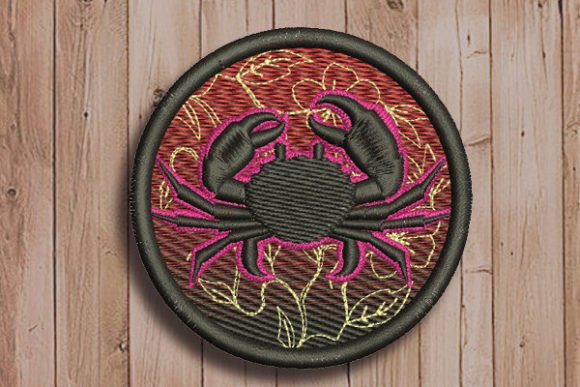
The concept itself—a crab enclosed within a circle—is deceptively simple, yet it offers a lot of room for creative interpretation. The circular framing gives it a badge-like quality, making it feel like a logo or a patch ready to be slapped onto a tote bag or a denim jacket. But before we get into where this design fits best, let's talk about how it feels to actually stitch it out.
First Impressions: Mood and Visual Personality
The mood created by Crab in Circle is playful with an edge. It doesn't scream "baby shower" unless you tone down the colors, but it also isn't too dark for a Halloween-themed project. The layout suggests a central focal point, which is exactly what you want for machine embroidery. Unlike busy all-over patterns, this design demands attention on a specific spot, whether that is the chest of a sweatshirt or the front panel of a cap.
Visually, the design relies heavily on the contrast between the fill stitches of the crab and the clean lines of the surrounding circle. If executed correctly, the result should look crisp and professional. However, the success of this embroidery design hinges entirely on your thread choices. A bright orange crab on a navy background will pop with energy, while a white-on-white execution might lose some of the "spooky" detail that makes the design interesting.
Real-World Application: From File to Finished Product
I recently considered using Crab in Circle for a small batch of custom aprons intended for a local artisan market. My initial thought was that the nautical theme would fit perfectly with kitchen towels and cooking gear. But as I ran through the mental checklist of potential applications, I realized this design has a much broader utility than just kitchen decor.
Imagine a boutique selling handmade goods. They could use this design on a set of embroidered patches to sell alongside their clothing line. Or, consider an Etsy seller creating personalized gifts for pet owners—imagine the crab stitched onto a bandana for a dog. The versatility here is high, provided the scale is right. For custom apparel like t-shirts and hoodies, the design works well as a standalone graphic on the back yoke or the center chest. It adds a unique character to basic garments without overwhelming the fabric.
For baby embroidery, the design requires a bit more caution. While the crab is cute, the "spooky" descriptor in the product description suggests a slightly edgier aesthetic. On a onesie, this might work better as a subtle accent on a sleeve rather than a large centerpiece, depending on the color palette chosen. The key is to ensure the final finished product feels intentional and not just like a random clip-art selection.
Navigating Technical Challenges and Fabric Choices
Every machine embroidery design has its limitations, and Crab in Circle is no exception. One of the most critical factors when evaluating this piece is the hoop size relative to the design complexity. If you are working with a smaller hoop, you must ensure that the details in the crab's claws and legs do not become muddled. Small details often suffer when the design is scaled down too aggressively, leading to a loss of definition that can make the crab look blobby rather than distinct.
Fabric texture plays a massive role in how this design presents itself. On smooth fabrics like cotton twill or linen, the satin stitch edges will appear sharp and clean. However, if you attempt to stitch this onto a highly textured fabric, such as a chunky knit sweater or a heavy canvas, the tension of the stitches may cause the fabric to pucker around the circular border. In these cases, a heavy-duty stabilizer is non-negotiable to maintain the structural integrity of the design.
There are also specific scenarios where you should proceed with caution. Stretchy fabrics, such as jersey knits used for t-shirts, require a stretch stabilizer to prevent the design from distorting after washing. Similarly, if you plan to use this on a curved surface like a baseball cap, the circular nature of the design might not lay flat against the curve, potentially causing gaps in the stitching or uneven tension. For embroidered patches intended for iron-on application, the density of the fill stitches is crucial; too dense, and the patch becomes stiff; too loose, and the backing might show through.
Impact on Brand Value and Customer Trust
For those of us running craft businesses or selling on platforms like Etsy, the quality of the embroidery directly impacts customer trust. A poorly stitched embroidery file can ruin the perceived value of a handmade product. When a customer sees a design like Crab in Circle that is stitched cleanly, with consistent thread tension and no puckering, they perceive the entire item as higher quality.
This design has the potential to elevate a simple tote bag into a statement piece. The "spooky and gorgeous" aesthetic can attract buyers looking for something unique, moving away from generic floral patterns. However, this also means you need to be meticulous with your thread colors. Using low-quality thread that pills or fades quickly will undermine the effort put into the design. Consistency is key for brand consistency; if every item you produce looks professionally finished, customers are more likely to return and recommend your shop.
Furthermore, the design's ability to serve as a recognizable motif helps with brand recognition. If you decide to feature this crab in your marketing materials or create a series of designs around sea creatures, having a strong anchor piece like Crab in Circle helps tie your collection together. It creates a cohesive look that appeals to buyers looking for curated collections rather than one-off items.
Practical Notes for the Professional Designer
Before you commit to a full production run, there are several steps you must take to ensure success. First and foremost, always test the design on scrap fabric that matches your final material. This allows you to check the stitch density and see how the threads interact with the specific weave of your cloth. You might find that a particular thread weight creates a better visual effect than the default settings suggest.
Reviewing the design in black and white mockups is another essential step. Sometimes, a design looks great in color but lacks sufficient contrast when viewed in grayscale. This is particularly important for digital embroidery files that will be used for printable mockups or online listings. Ensuring the design reads clearly even without color helps you gauge its effectiveness as a standalone graphic.
If you are planning to sell finished items, double-check the licensing terms associated with the digital product. Some designs allow for personal use only, while others permit commercial sales. Confirming these details protects your business from legal issues later on. Additionally, inspect the small details of the crab closely. Are the legs distinct? Is the circle continuous? Any breaks in the stitching can be magnified in photos, so a close inspection is vital.
Finally, consider the end-user experience. Will the design hold up after multiple washes? Dense areas of fill stitch can sometimes trap lint or cause stiffness, which might be uncomfortable on baby clothes or items worn close to the skin. Balancing aesthetics with wearability is the hallmark of a skilled designer.
In conclusion, Crab in Circle is a versatile and character-rich design that can add significant value to a wide range of embroidery projects. Whether you are creating a tote bag design for a summer festival, a sweatshirt embroidery piece for a holiday gift, or a commercial embroidery asset for a boutique brand, this design offers a solid foundation. With careful attention to fabric choice, stabilization, and thread selection, it can transform from a simple digital file into a stunning, sale-worthy handmade product.